



In 2012, Chris McKinlay used his data science skills to hack OKCupid. He processed data gathered from thousands of women’s profiles through bots, sorted out the ones that interested him and figured out what kinds of profile answers he needed to match with them. He then curated his profile based on that knowledge, while still being honest about himself, and gained high match percentages with thousands of women – with dozens of them writing to him each day. Suddenly, instead of always sending the first message and only getting a few responses, he was the one picking and choosing who to reply to in his crammed inbox. On his 88th first date, he met his wife.
It’s the start of the new year and we’re deep into cuffing season – you only have a month to find your next Valentine! If you’re single and like most people, you’re probably on dating apps, and you’re probably frustrated about them. Stories like McKinlay’s sound almost like a dream – is it really possible? Can you really hack dating apps and find your soulmate? Let’s dive in.
What do we mean by hacking?
Real hacking is, obviously, illegal. We do not condone hacking into the server or source code of any apps or websites, stealing data, anything like that. Instead, we are interested in the ways that we can socially hack a dating app, and how we can use the rules of dating apps to our advantage. After all, dating apps are a business, and they’re built to keep you on them. So what can you do to beat the platforms at their game and find your perfect match?
There are three main categories people talk about when they talk about hacking:
Technical exploits – hacking into the server, finding and abusing vulnerabilities, data scraping, etc. This is highly illegal and also quite rare, as large companies like successful dating apps invest a lot of money and manpower into keeping their site secure from hackers.
Manipulation tactics – creating fake profiles, using bots, paid engagement, any kind of spammy activity. This usually violates the TOS of the app or website, the methods are highly detectable and protected against and will result in your IP being banned.
Optimisation strategies – choosing the right photos, writing the optimal profile, good timing, taking advantage of paid boosts, A/B testing, etc. These methods are all legal and effective.
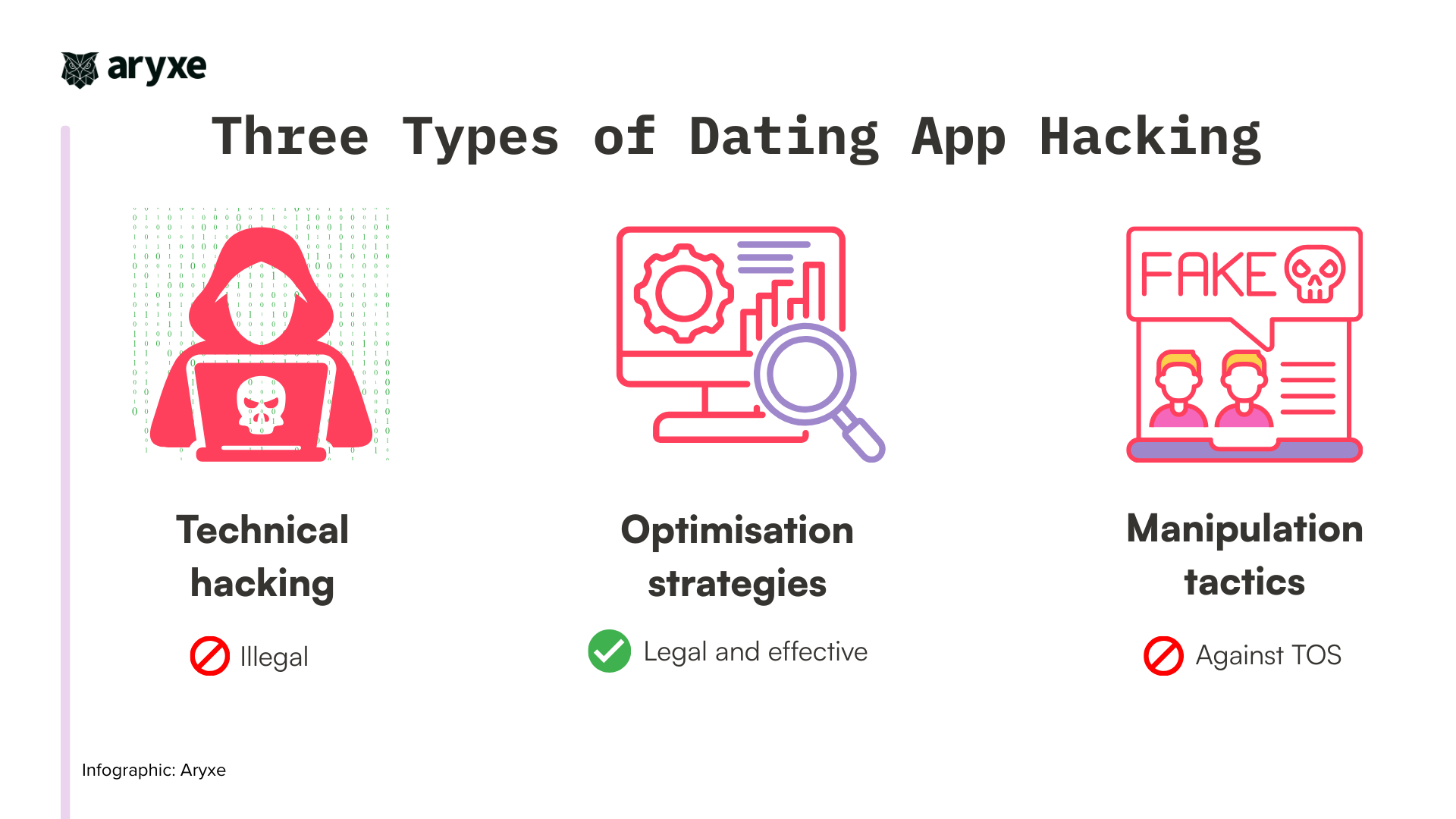
Chris McKinlay used mostly the last of these strategies, and while it worked for him, the kind of hacking he did would be a lot more difficult now, over a decade later. Websites have become more secure, and a lot of legal loopholes have been closed. Today, the risks for technical hacking and manipulation far outweigh the benefits.
The third strategy, which is what got McKinlay to his final result, is the one we will be focusing on in this article – how do you optimise your profile and get the most out of a dating app?
Optimising Your Profile
Whether you’re on Tinder or OKCupid, on Hinge or Grindr or Bumble, creating a great profile is the number 1 thing you can do to improve your success on dating apps. On pretty much every app, there are three main parts to a profile: your photos, your basic data, and the longer written bio or prompt responses. Except you really look great.
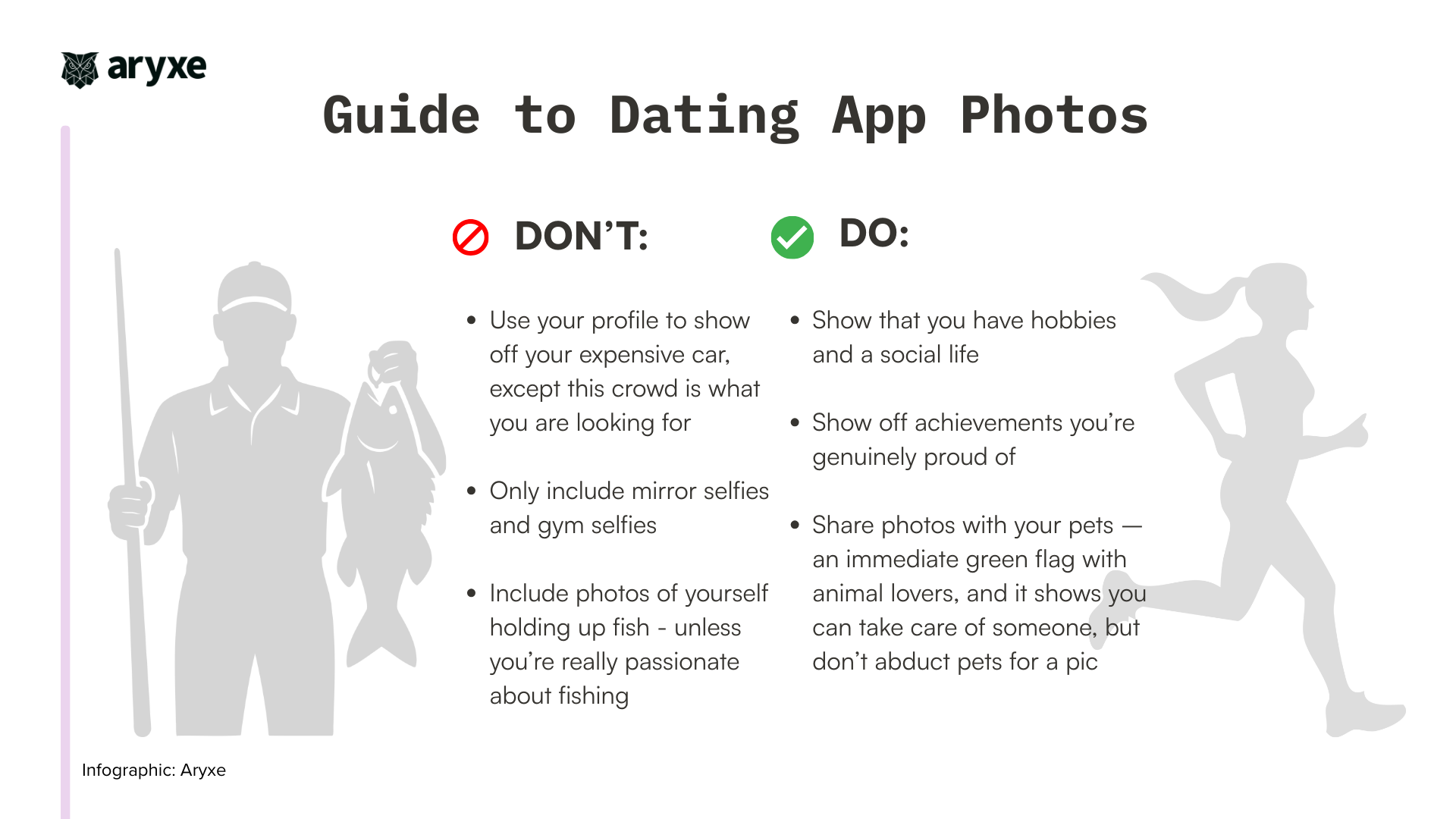
Choosing the right photos: Many people who aren’t getting a lot of matches think it’s because people are just too shallow and they aren’t attractive enough. However, if your profile only includes photos of you in front of an expensive sports car, holding up a fish, or half-naked in front of a mirror, the problem is actually a lot easier to fix.
It’s great to display your good sides, whether that’s with a photo of you in your favourite dress or finishing a marathon, but people can tell if you’re just trying to show off. Most of us are looking for some sort of authenticity, and fun – instead of your car, why not post a photo with your friends? Including your favourite hobbies and activities in photos is also a good idea (and no, the one time you went fishing with your dad doesn’t count).
Curating your data: This part is pretty straightforward – be honest about your name (a nickname is fine, but don’t come up with a pseudonym), age, and any optional details you want to feature, whether that’s your education, your height, or whether or not you want kids. If you’re looking for a serious connection, the more data you add, the better. This tends to be the second thing people look at after your photos.
Be a copywriter for yourself: Whether you’re writing a Tinder bio or answering prompts on Hinge, how and what you write can be key to convincing someone to give you a chance. An attractive face and well-paid job may convince people to read the rest of your profile, but if your answers are boring and unoriginal, they’re likely to lose interest. People are attracted to humour, authenticity and warmth. Try to include information about yourself that would be an easy conversation-starter. If the app allows for voice recordings, that’s a fun way to add an extra layer of intimacy to your profile. Avoid clichés and definitely don’t use your bio to write lists of requirements you have for your future partner.
Gaming the System
Once you’ve built an eye-catching and authentic profile, it’s time to put it to use. Dating apps are algorithmic, and while you can’t technically hack them, you can still try to make the algorithms work for you.
Treat your profile like a continuous project – if you’re not happy with your results after a few days, find some things to tweak and try again. This could be your selection of photos or their order, the type of data you include on your profile or the prompts you’ve chosen to answer. Maybe your music taste is really corny, and you would get more matches without connecting your Spotify to your profile (once you’ve already connected with someone over a few dates, your love of Disney musicals is more likely to be tolerated).
The apps offer many paid boosts that can be used to your advantage. In order to maximise their ROI, consider some of the following:
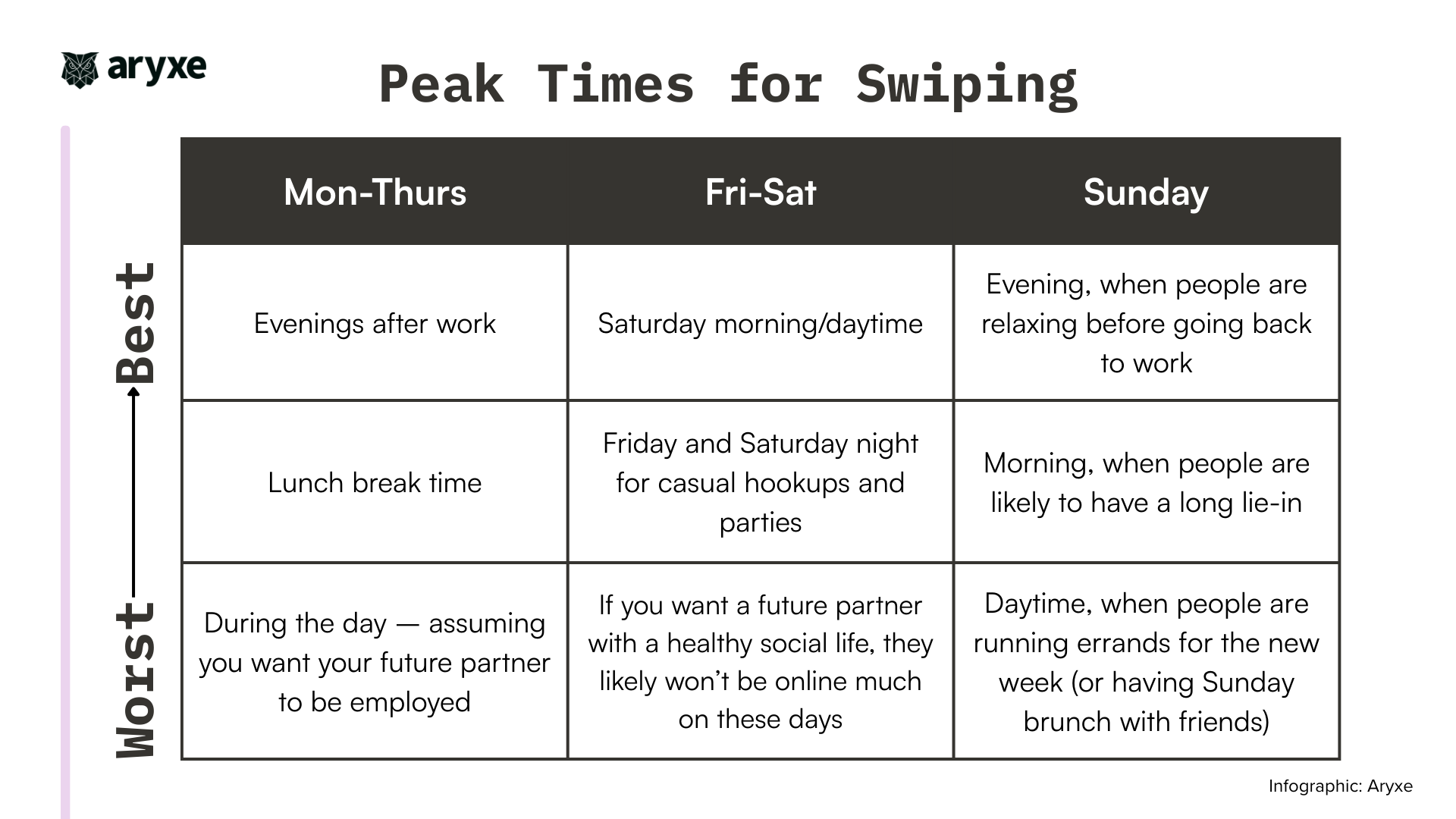
Timing for boosts: boosts give your profile heightened visibility for a certain amount of time (e.g. 30 minutes for Tinder, 1 hour for Hinge). To make sure you’re not wasting your money, try to use boosts at times when more people are likely to be on dating apps, such as weekday evenings after work, or Sunday evenings, when people are resting and rewinding.
Strategic use of Super Likes: you should use your Super Likes on people you’re genuinely interested in, but also people you think would be likely to have an interest in you, too (maybe even tweak your profile slightly to attract the specific person right before or after sending them a Super Like). Super Likes are a way to get a person’s attention, but doesn’t guarantee you a match if they wouldn’t be interested in the first place.
Lastly, use a cross-platform strategy: maintain a consistent presence on multiple apps for a wider reach. Have slightly different profiles on each one and take advantage of the unique points of each app. While there will be some overlap between the people you see on each one, they will also all have some hidden gems you wouldn’t have found otherwise.
The most important tip is to take things off the app as soon as possible. Don’t be pushy, but once you’re interested in someone and you sense that it’s mutual, make it clear that you would like to meet them face to face, where the connection can truly grow outside of the limitations of dating apps.
Treat Dating Like a Business (Without Killing the Romance)
Dating apps are a business environment, and when we use them, we become marketers for ourselves. The people who get ahead don’t just hope for luck – they experiment, test, and refine.
Treat your profile and your conversations like a living project: use A/B testing for photos and bios, pay attention to conversion metrics (matches to replies), and equip yourself with the right tools to track what works. Just as in sales or marketing, the key is learning from feedback and iterating, not chasing shortcuts. Do that, and the “algorithm” starts to look less like an enemy and more like a business partner nudging you toward the right connections.
Love is still real and organic and spontaneous, but the ways we look for it have changed from generation to generation. While our goal should still be to find an authentic connection with another person, our methods should be adapted according to the tools we use. Today, for many of us, those tools are apps and algorithms. Learning how to make those apps work for you can help you avoid bad dates and find more compatible people – and, eventually, maybe even a partner for life.

